


Choosing an electric bike may seem easy at first, but it becomes much more complex when you start comparing motors, batteries, frames, sensors and more. A good electric bike buying guide should not simply list specifications; it should help you understand which features really matter when choosing one.
In this guide, we will compare the experience of an electric bike with a conventional bicycle, explain the difference between a rear hub motor and a mid-drive motor, look at battery capacity and real-world range, review folding and standard formats, different wheel sizes, weight, brakes, and see why sensors, components, after-sales service, test rides, available subsidies and legal compliance are important when choosing the right model for your needs.
At Legend eBikes, we have spent more than 15 years focused on urban mobility, folding formats and practical everyday use, so many of these questions often come up in our conversations with customers. In our experience, the best choice is the bike that fits your real life and the use you are going to give it.

To begin, here is a quick checklist so you can see at a glance some of the points to consider. We will explain them in detail later:
| If you need... | Pay special attention to... |
|---|---|
| To commute with less effort | Comfort, assistance, reliability and support |
| To store it in a small space | Folding frame, folded size, weight and handling |
| To combine bike, car, train or lift | Portability, battery access and folded dimensions |
| To climb hills or carry loads | Motor type, gearing, battery and brakes |
| A more natural pedalling feel | Sensor type, geometry and transmission response |
| Simple assistance for city riding | Assistance levels and ease of use |
| Long-term peace of mind | Components, warranty, spare parts and workshops |
| Smart functions for everyday use | Display, connectivity, app, assistance modes and bike status |
| Legal use in Europe and access to subsidies | EPAC compliance, 250 W motor and assistance up to 25 km/h |
An electric bike still feels like a bicycle. You pedal, steer, brake and choose your route. The difference is that the motor assists your pedalling, helping you gain speed, climb hills or ride against headwinds.
In practice, the decision between an electric bike and a conventional bicycle usually depends more on effort, distance and consistency than on speed. A conventional bike may be ideal if your journeys are short, flat and you enjoy riding completely without assistance. An electric bike can be especially useful if you want to arrive less tired, extend your range, carry more weight or ride more often.
The big change is not speed. The real change is consistency. An electric bike makes the difficult parts of your journeys more manageable, so you are much more likely to use it again tomorrow.
This is one of the most important decisions, especially if you live in a city.
A folding electric bike is not simply a smaller version of a regular electric bike. It is a different answer to a recurring question: where are you going to store your bike when you are not using it?
If storing it, taking it upstairs, putting it in the lift or leaving it safely overnight is going to be difficult, there is little point in having the best motor in the world.
A standard electric bike will require more space and will be less flexible in your case if your everyday life includes stairs, lifts, public transport, a car boot or travelling with it.

A folding electric bike makes sense when space and flexibility are not secondary details, but part of the buying decision.
It may be the best option if:
This is where folding electric bikes earn their place and solve the problem that often decides whether a bike becomes part of your routine or stays parked.
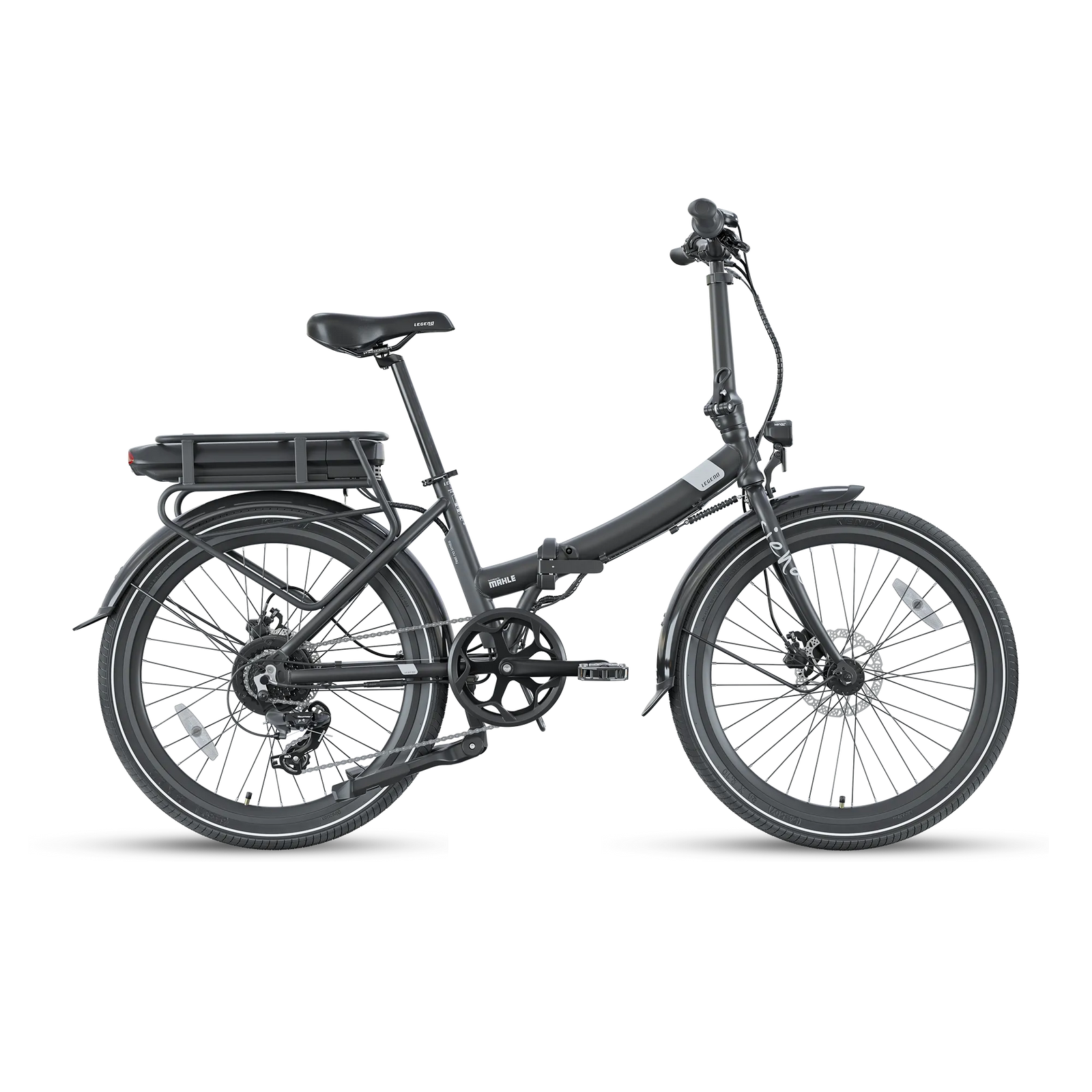
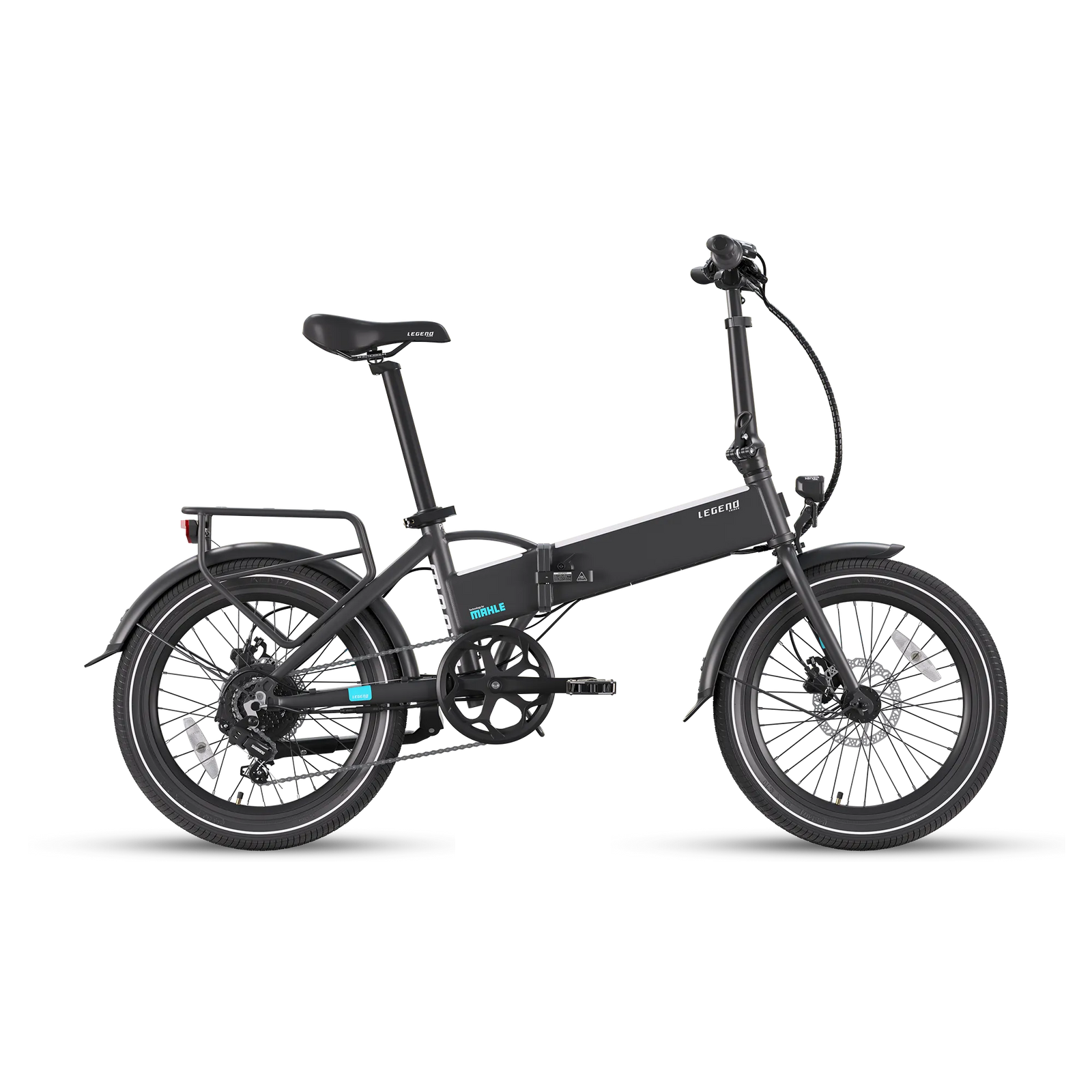
For Legend, this is one of the clearest use cases. Models such as the Legend Siena and the Legend Monza are designed for compact urban mobility, that is, for daily journeys, storage and combined transport, without leaving aside a level of comfort similar to conventional bicycles.
Wheel size is not an aesthetic detail. It defines how the bike feels, how it fits into your space and how it behaves in the city. The most common sizes on electric bikes are 20", 24", 26", 27.5" and 700C (28").
At Legend we offer a range that is unusual in the market:
This combination allows you to choose according to the space you have and the type of journey you make, without giving up the possibility of folding.
Our best-selling model, the Legend Siena, is an uncommon proposal: a 24" folding electric bike that combines the stability of a larger wheel with the portability of a folding frame.
Weight is one of the most underestimated criteria when buying an electric bike, and one of the factors that has the greatest impact on real use.
An urban electric bike usually weighs between 18 and 25 kg. That difference, which may seem minor on paper, in practice determines whether you will be able to carry it up the stairs of your building, put it in the boot of your car, lift it onto a train luggage area or load it onto the bike rack of your motorhome.
For a folding electric bike, weight is especially important because part of the advantage of the format depends on being able to move it when it is not rolling. However, the lightest option is not always the best one. A slightly heavier folding eBike can offer a more solid frame, greater riding comfort and a more reassuring feeling on daily routes.
This is the balance we look for at Legend eBikes. Our models are generally in the 21 to 24 kg range, because we prefer to prioritise comfort, stability and robustness in real riding conditions, while still keeping the folding format practical for storage, transport and everyday use.
The position of the motor is one of the most important decisions in any electric bike buying guide. The two most common options are the rear hub motor and the mid-drive motor. Both can be good. They simply fit better with different types of user and different types of bike. It is also worth remembering that motor position does not explain everything: the electric system, assistance programming, controller and integration quality have a big influence on the final experience.

A rear hub motor is integrated into the rear wheel. It pushes the bike from behind and usually offers a smooth and intuitive feeling for urban riding. This system is common on many urban electric bikes and folding models because it allows for a clean design, efficient assistance and natural integration into compact frames.
A rear hub motor is usually a very sensible option for urban users. If your main use is commuting, moving around the city, combining transport or using it for your trips, you probably do not need the performance of a mid-drive motor.
A mid-drive motor is located around the bottom bracket, in the centre of the bike. It delivers assistance through the transmission, so the motor support is better integrated with the rider's pedalling. This usually offers a more natural and efficient feeling, especially on climbs or mixed terrain. Mid-drive motor systems are often chosen by users who prioritise climbing performance, weight distribution and a response closer to that of a traditional bicycle.
Another important element in the riding experience is the sensor that tells the motor how and when to assist. The two most common systems are the cadence sensor and the torque sensor.
A cadence sensor detects that you are pedalling and activates assistance based on that movement. Put simply: when you start pedalling, the bike knows you want help.
This type of system can work very well for everyday users because it is intuitive, easy to use and especially practical in urban riding with many stops and starts. It can be a very suitable option if you want smooth assistance for commuting, pulling away at junctions, starting at traffic lights and moving around the city without complicating the experience.
A torque sensor measures the force with which you press the pedals. The more force you apply, the more assistance the motor delivers. Many users describe it as a more reactive or sporty feeling, especially on variable terrain.
Again, this will depend on your preferences and the use you are going to give the bike. A torque sensor may feel more dynamic for users looking for a sportier response linked to effort. A cadence sensor can be especially useful for those who value ease of use, predictable assistance and comfortable urban mobility.
Legend uses a cadence sensor, and that fits well with the brand's practical approach, focused on daily city journeys or hybrid use (in the case of the Etna and the Milano). For users looking for an electric bike that is accessible in everyday use, and not technical simply for the sake of being technical, it can be a very sensible choice.
One of the most common questions when buying an electric bike battery is very simple: how many kilometres can it do? The honest answer is that battery capacity matters, but it is not the only thing to consider, because the rider's weight, terrain, wind, tyre pressure, temperature, assistance level and riding style will also have an influence.
That is why useful conversations about range focus on real-world range, not just an ideal catalogue figure.
Battery capacity is usually expressed in watt-hours, or Wh. In simple terms, more Wh usually means more available energy. But more energy does not translate into the same distance for every user or on every route.

If you want a more detailed explanation of range, assistance levels and route variables, this article on how many kilometres you can travel with an electric bike can be useful complementary reading.
Many buyers overestimate the range they need every day. If your commute is between 8 and 15 km each way, you may not need the largest battery on the market. What matters is that the battery covers your routine with a reasonable margin, without making the bike unnecessarily heavy or expensive.
This is especially important on a folding electric bike, where balance, portability and daily handling also matter. A sensible battery choice often creates a better bike overall, not just a bigger number on paper. That is why compact urban models such as the Legend Siena or the Legend Monza can be especially relevant for users looking for a practical everyday bike, rather than simply the highest possible range figure.
A well-cared-for lithium battery usually offers between 500 and 1,000 full charge cycles before it begins to lose noticeable capacity. In normal urban use, that translates into several years of everyday use before considering a replacement.
Some simple habits help extend its lifespan:
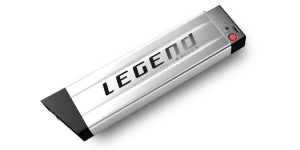
When the time comes, the battery can be replaced while keeping the rest of the bike, which makes the cost per year of use quite reasonable.
On an electric bike, the brakes are a critical component. Speeds may be similar to those of a conventional bike, but the additional weight (motor, battery, reinforced frame) makes braking performance especially important in everyday use.
The three common options are:
For an urban electric bike used daily, a good disc brake system is essential. Hydraulic disc brakes are usually the most comfortable and confidence-inspiring option, especially if you ride in traffic, carry extra weight or use the bike in different weather conditions.
When buyers compare electric bikes, they usually look first at the motor and the battery. That makes sense, but the mechanical parts still define the user experience week after week: brakes, transmission, tyres, wheels, saddle and other components can affect regular maintenance.
Components from recognised brands can make maintenance, part replacement and workshop support easier. That does not mean that every lesser-known component is bad. It means that clear specifications and ease of servicing matter, especially over time.
This can be especially important if you plan to use the bike daily and not only occasionally. For many buyers, ease of maintenance becomes more important after purchase than a striking feature on the first day. That is why clear component choices and practical everyday design matter so much in a brand like Legend, oriented towards real recurring use and not occasional novelty.
When comparing electric bikes, you should not focus only on the motor, battery or wheel size. The electric system behind them also matters: the controller, display, app, assistance modes and error diagnostics.
A smart electric bike can make the experience clearer and easier to manage. What matters is being able to better understand the bike's status, adjust assistance, record your rides and detect possible issues more quickly.
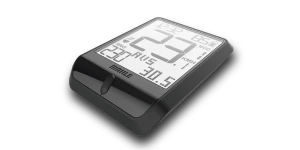
At Legend, we work with an electric system developed by MAHLE, one of the most recognised German suppliers in the automotive industry, which provides reliable integration and long-term support. Through the handlebar controller, the MAHLE Pulsar One display and the app, you can check ride data (average speed, distance, remaining battery), adjust assistance levels, review system status and receive alerts if any issue is detected.

And if any doubt or issue arises, our technical team can review the system status remotely to diagnose it faster, saving you time and trips to the workshop.
A smart electric bike does not only help you move; it also helps you better understand how your bike is working.
An electric bike is a significant investment, and more and more users use it as their main means of transport. That is why it is worth considering specific electric bike insurance covering theft, accidental damage and, depending on the policy, civil liability.
At Legend, we collaborate with two of Europe's most reliable e-bike insurance partners, Laka and Qover, which offer conditions designed specifically for cyclists and urban electric bikes, with clear coverage and simple management processes. The decision to take out insurance is entirely yours, but it is worth knowing that serious options adapted to real use exist.
An electric bike is not just a product. It is a mobility tool you are going to use daily. That is why partner workshops or service points and after-sales service matter so much in practice.
Even a very good bike may need an adjustment, brake check, electronic inspection, replacement of wear parts or general advice. Many buyers underestimate how reassuring it is to know where to go after the purchase.
For those who value long-term confidence, this can be as important as the choice of motor. At Legend we place great importance on support, partner workshops and practical after-sales guidance, something especially relevant if you buy online and want the peace of mind that help does not end when the order is completed.
A product page can explain many things, but it cannot fully tell you how a bike feels when you ride it. Comfort, confidence, riding position, ease of folding and daily handling are things you only really notice when you get on the bike. That is why a test ride can make such a difference.
At Legend, we know that one of the main barriers when buying an electric bike is uncertainty. That is why we give so much value to the possibility of trying a Legend before making the final decision, through our network of more than 60 test points in Europe, where you can visit and try the model you are interested in before buying it.
For some users, a showroom test ride is enough. For others, the most important thing is being able to compare the feel of the bike with their real life, not just with a technical sheet. That kind of reassurance is especially valuable when buying online and wanting to choose with more confidence, not just with more information.
Buying an electric bike online can feel like a bigger step than buying many other products. It is not just about the price. It is about size, feel, storage, maintenance, warranty, setup and the simple doubt of whether the bike will really fit your everyday life when it arrives.
We understand that doubt. In fact, it is one of the reasons why we believe information about electric bikes should be practical, honest and easy to use. What helps reduce that uncertainty:
At Legend, we try to reduce that uncertainty by focusing on practical design, clear information and support that continues after the purchase.
In many European countries, public aid exists for the purchase of electric bikes, generally linked to sustainable mobility plans. This aid may come from the State, the autonomous community or region, or directly from the town council.
The amounts and requirements vary greatly depending on place and timing, but they can represent real savings on the final price. Some common examples:
Before buying, it is worth spending a few minutes checking which subsidies are currently available in your city and region. In many cases they cover between €200 and €600, and sometimes more. If you want to see an updated list by city, we have compiled it in our electric bike subsidy guide.
An urban electric bike usually comes well equipped as standard, but there are some accessories worth having from day one:
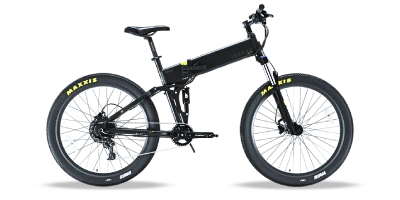
For the Legend Etna, we also offer the BySchulz folding stem as an optional accessory, ideal for those who want to maximise portability by also folding the handlebar.
If you buy an electric bike in Europe, it is important to understand what an EPAC electric bike is. EPAC stands for Electrically Power Assisted Cycle. In practice, it is the category most urban users are looking for: a pedal-assist bicycle with a maximum nominal continuous motor power of 250 W and assistance that cuts off at 25 km/h.
You will also often see the term EN 15194. It refers to the recognised European standard for EPAC bicycles. For the buyer, this matters because it helps confirm that the bike has been designed for the European market and for the type of legal and everyday use most users need.
Regulations vary depending on the country and context:
Beyond the legal obligation, wearing a helmet is always a good idea, especially in the city.
A standard EPAC electric bike is designed for use similar to a conventional bicycle, with pedal assistance up to 25 km/h and a maximum nominal continuous power of 250 W. For most urban users in Europe, this is the simplest and most practical category for moving around the city, cycle lanes and everyday routes.
But not all electric bikes are designed for the same use. There are also higher-power models or models with assistance at higher speeds, such as some S-Pedelecs or electric bikes aimed at sport, recreational or off-public-road use. These models can be very interesting for certain users, but it is important to understand that they normally belong to another legal category or require different conditions of use.
The difference is not that one option is “better” or “worse”. The difference is where, how and for what purpose you can use it.
Before choosing a higher-power or higher-speed electric bike, it is worth checking whether it affects the following:
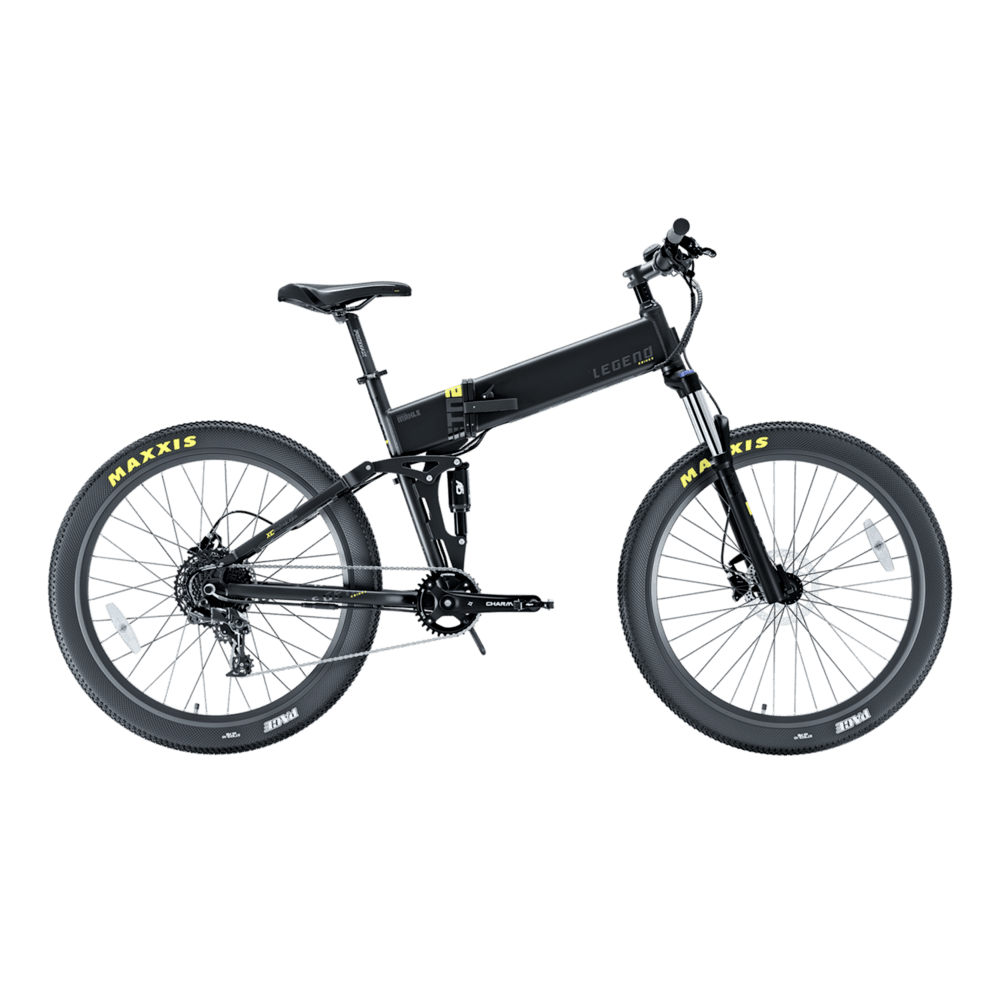
At Legend, most models are designed for urban and everyday use within the EPAC framework. For example, the Legend Etna 500W reaches up to 43 km/h and is designed for off-road use or private land, not for riding around the city or on public roads as a conventional EPAC bicycle.
You can see the complete range of Legend electric bikes with all detailed specifications in our store.
Start with your routine. Ask yourself:
Anyone choosing between a normal bicycle and an electric bike is really deciding how much effort they want cycling to require.
Anyone choosing between a folding electric bike and a standard one is deciding how the bike fits into their home, work and transport.
Anyone comparing a rear hub motor and a mid-drive motor is choosing between simple urban assistance and a more dynamic feel oriented towards climbs.
There is no perfect electric bike for everyone. There is a bike that adapts to your needs, or it does not.
A good electric bike should make daily mobility more realistic, not more complicated. The best buying decisions usually come from understanding the basics well: what changes with assistance, how motors differ, how sensors affect the riding feel, how real-world range works, whether the folding format fits your lifestyle, what support you can expect after the purchase and whether the bike complies with the European EPAC framework.
At Legend, that is exactly how we think about our bikes. We build them for real urban use, practical storage, daily journeys and a riding experience that should work again and again, not just look good in a specification table. If you want a bike that fits city life, combined transport, flats, camper use or daily mobility with less friction, that approach can make a real difference.
The right choice still depends on your route, your storage space and your habits. But when the bike is designed around real use, and when the buying process gives you enough clarity and confidence, choosing well becomes much easier.
Want to take the next step? Explore the Legend range, book a test ride at your nearest showroom or read our guide on how many kilometres you can travel with an electric bike to fine-tune your decision.
Leave us your details and take advantage of the available subsidies. We’ll get in touch with you as soon as possible to let you know about the active grants in your city. We’ll also help you discover which electric bike models best suit your needs.
Or if you prefer, contact us on WhatsApp at +34 938 488 480. Contact us now via WhatsApp.
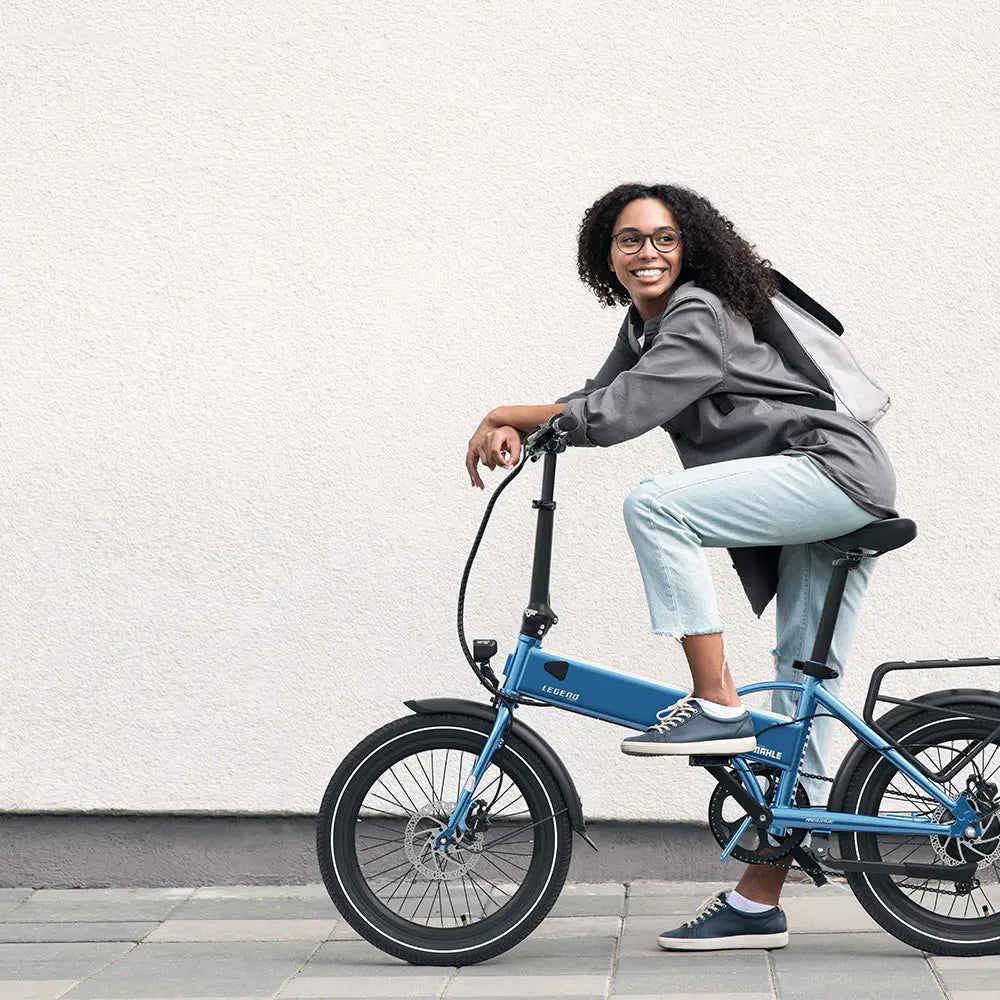

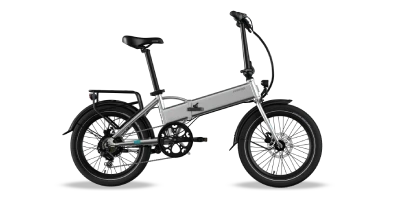
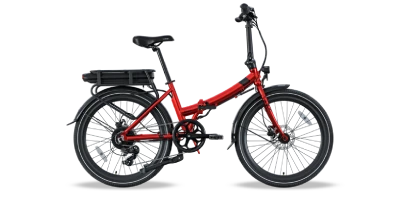
Light, foldable, and made for the city
Only 19 kg. Perfect for moving around the city, taking it in the elevator or carrying it in your camper van. The lightest folding eBike in the Legend range, ideal for nomads, weekend getaways and urban commuting.
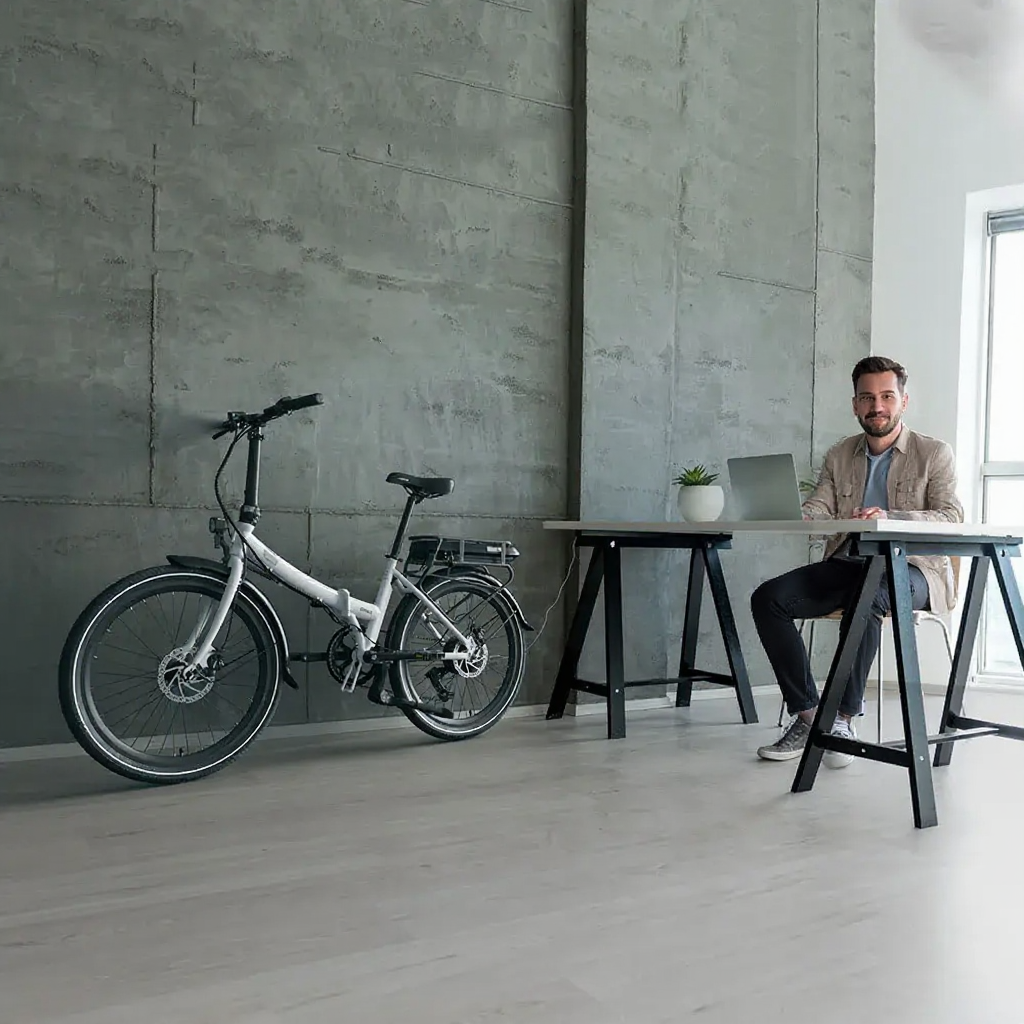

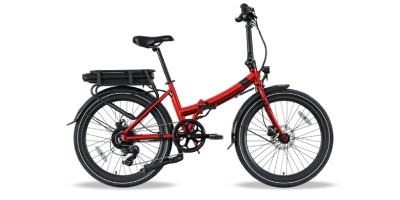
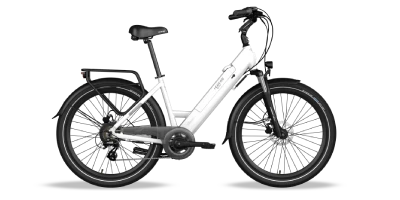
Comfort and style for your daily rides
Our most popular model in Europe, loved by both men and women. With a comfortable upright position and vintage design, the Siena is ideal for daily city rides, taking kids to school or enjoying relaxed outings.
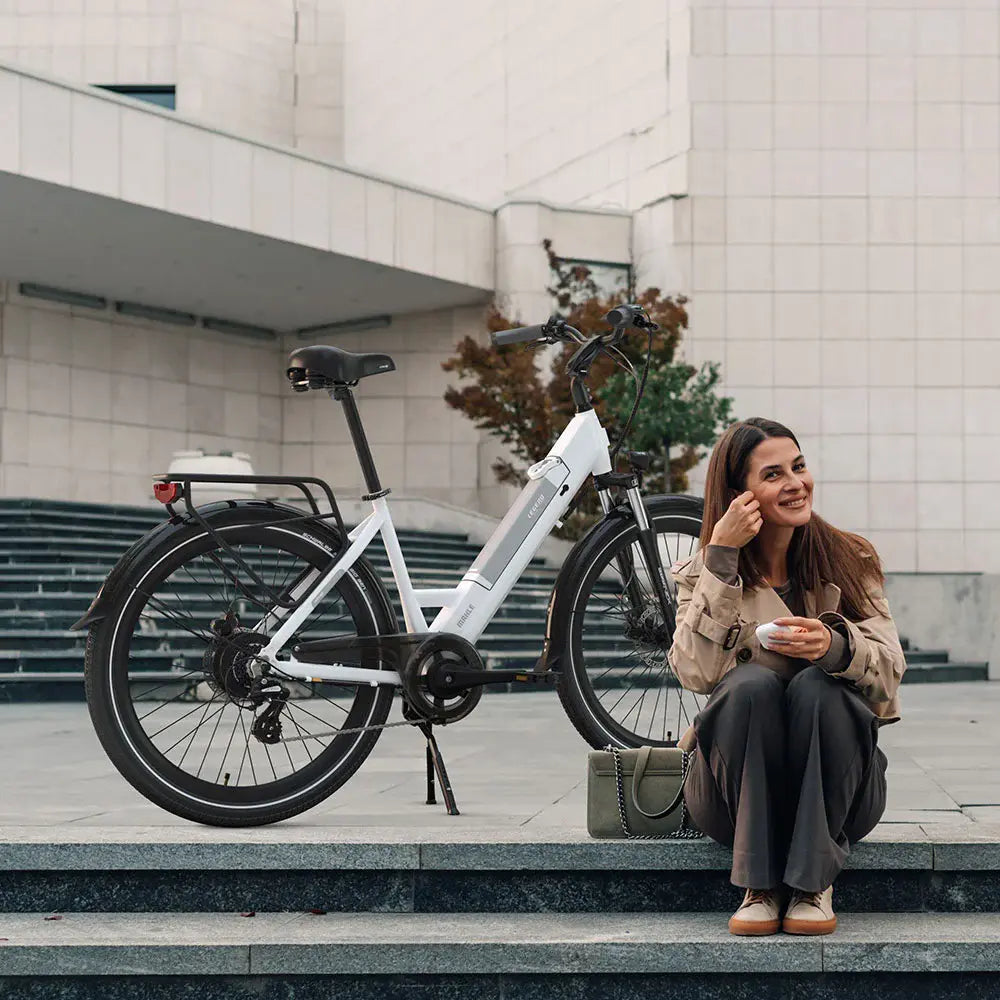

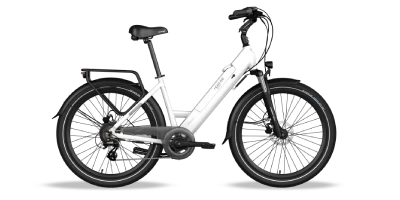
Smooth cruising with power and elegance
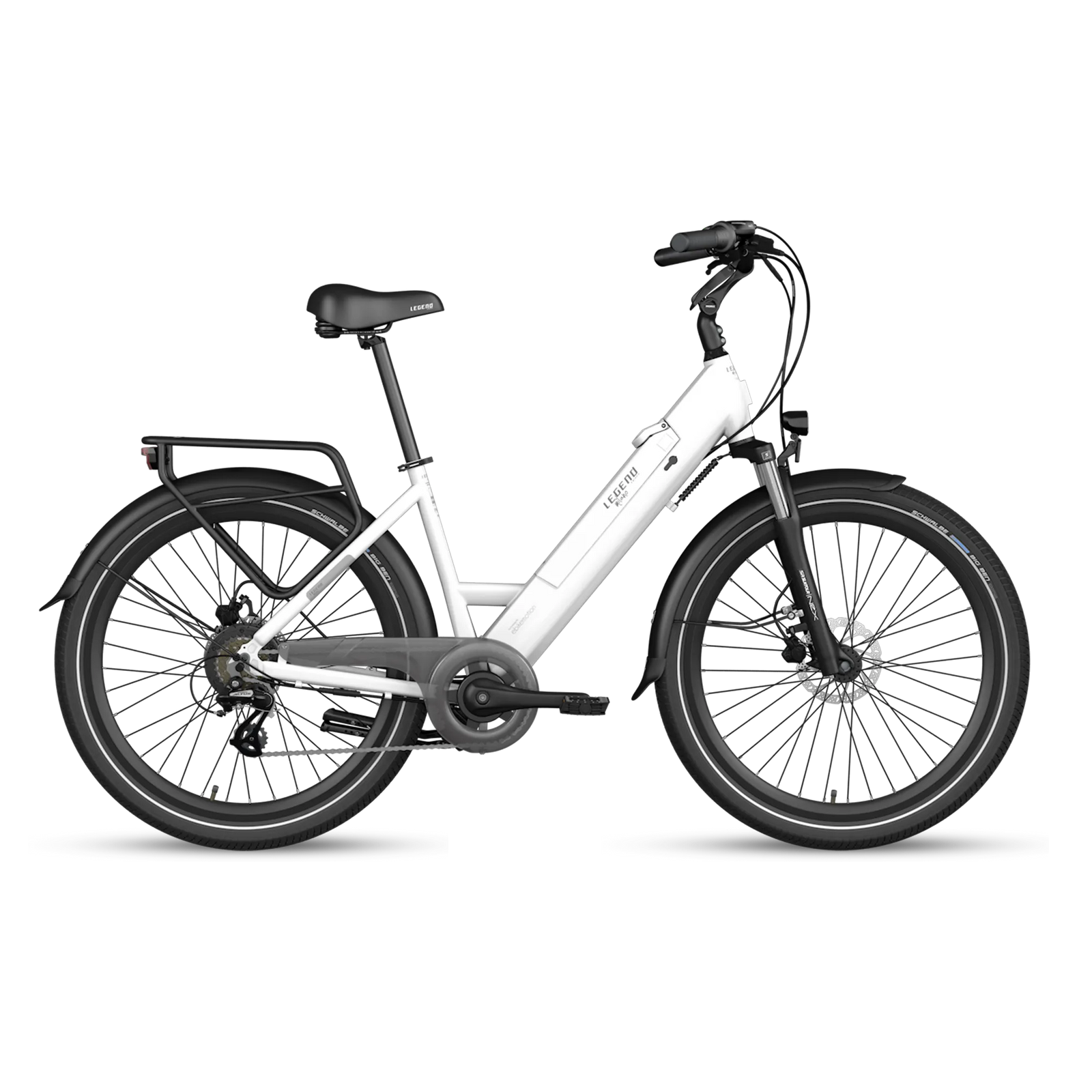
Elegant and powerful, the Milano is built for comfort and range. With front suspension and an upright riding position, it’s ideal for everyday use or weekend adventures.
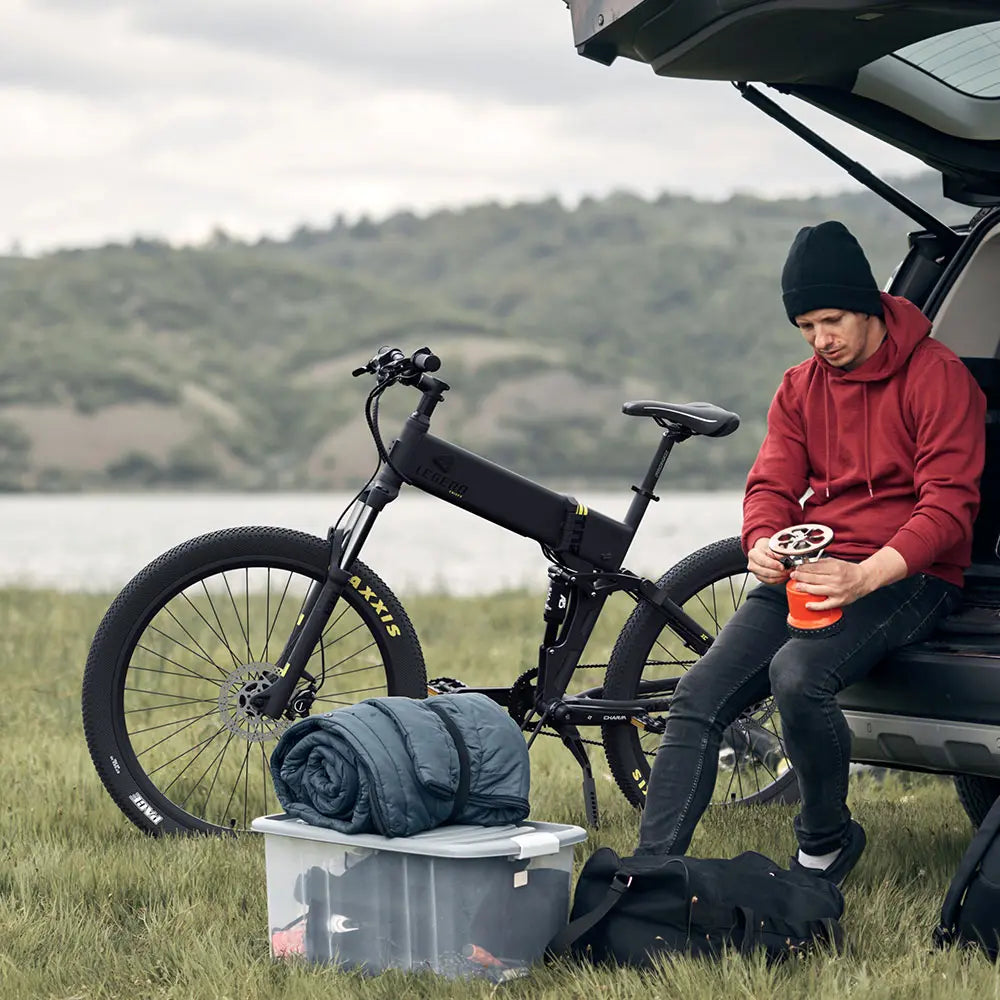

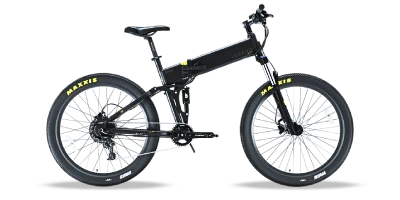
Ready for trails, streets, and everything in between
A rugged full-suspension eMTB designed for both off-road fun and urban versatility. The Etna adapts easily from mountain trails to city streets, making it the go-to choice for dynamic riders.
Real people. Real journeys. See how Legend eBikes are changing everyday lives across Europe.
See all stories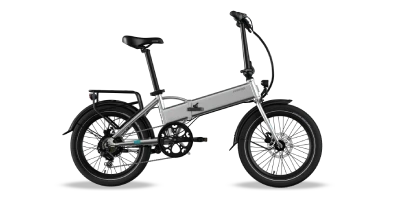
 Contact us now on WhatsApp