

Charging times, real range, battery types and how to extend battery life.
Before using the bike for the first time, fully charge the battery with the supplied charger.
A Super Charger that reduces the charging time by approximately half is available on our website.
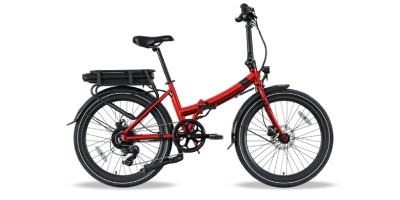
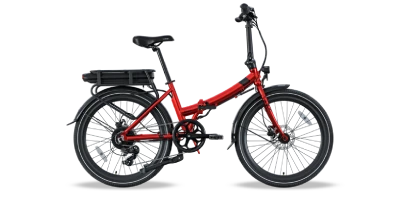
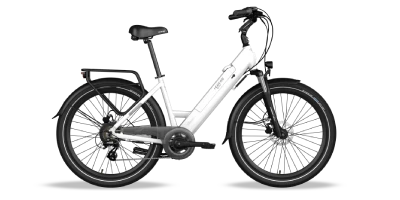
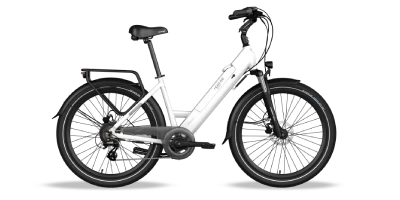
Legend Siena

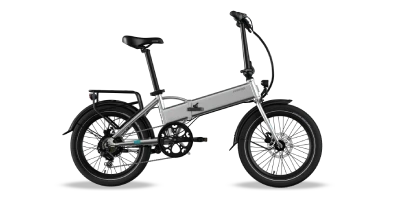
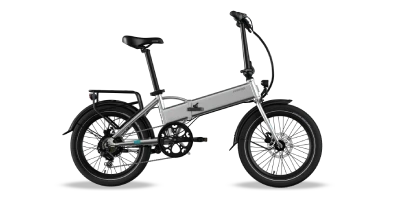
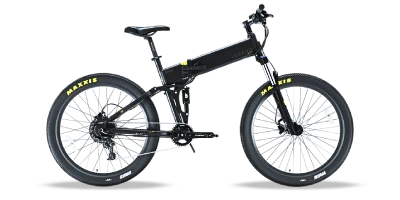
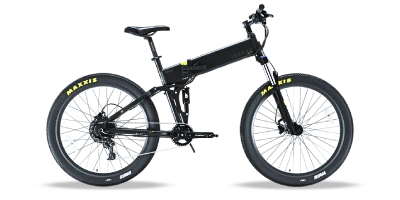
Legend Etna / Legend Monza

Legend Milano

A fully discharged battery normally takes between 6 and 8 hours to charge. The exact time depends on the battery capacity and its remaining charge.
Our Super Charger, available on our website, reduces the charging time by approximately half.
The removal procedure depends on the model.
Important
Unlock the battery with the key before removing it. Once unlocked, hold the battery securely and pull it firmly in the direction shown for your model.
Legend Siena — battery on rear rack
Insert the key into the lock and turn it to unlock the battery.
Slide the battery firmly out of the rear rack while supporting its weight.
Remove the key after returning the lock to its initial position.

Legend Monza / Legend Etna — INFrame battery
Insert the key into the lock and turn it to unlock the battery.
Support the battery and pull it firmly out of the frame.

Legend Milano — DTube battery
Insert the key into the lock and turn it to unlock the battery.
Support the battery and pull it firmly out of the down tube.

Battery weights vary by model and capacity:
INFrame battery — Monza / Etna
DTube battery — Milano — 36 V
Battery on rear rack — Siena — 36 V
Most models are available with at least two battery capacities:
All batteries include temperature sensors and a battery management system (BMS) designed to ensure safe and efficient charging and discharging.
They use high-quality cells that power the motor with efficiency rates of up to 80%.
The main difference is the amount of energy stored. A higher-capacity battery can provide more range under the same riding conditions and assistance level.
*Test estimate based on a 70 kg cyclist riding on flat terrain, without stops or wind, using assistance level 1. R200 approval pending.
The following table lists the main battery options for each eBike model:
| eBike | Battery model | Motor | Voltage | Capacity | Energy |
|---|---|---|---|---|---|
| Etna 500 W | INFrame | 500 W | 48 V | 10.5 Ah | 504 Wh |
| Monza / Etna | INFrame | 250 W | 36 V | 14 Ah | 504 Wh |
| Monza / Etna | INFrame | 250 W | 36 V | 10.4 Ah | 374 Wh |
| Milano | DTube | 250 W | 36 V | 14 Ah | 504 Wh |
| Milano | DTube | 250 W | 36 V | 10.4 Ah | 374 Wh |
| Siena | Rear rack | 250 W | 36 V | 13 Ah | 468 Wh |

All Legend eBikes use lithium-ion batteries. Like every lithium-ion battery, they age naturally and gradually lose capacity, even when they are not being used.
The battery does not require routine maintenance apart from correct charging and storage. The charger indicator turns green when charging is complete. To protect the battery, do not store the bike where the temperature can fall below 0 °C or rise above 50 °C. Park the eBike in the shade or in a cool place whenever possible.
Avoid fully discharging the battery. Recharge it when approximately 30% remains.
Storage
For long-term storage, leave the battery at approximately 60% charge. Do not store it fully discharged or fully charged for long periods. Because lithium-ion cells slowly self-discharge, check the charge level about every two months and, if necessary, charge the battery for approximately 30 minutes.
Remember:
Partial charging and charge cycles
One charge cycle is completed when the battery has delivered energy equal to its full capacity. This can happen in one discharge or across several partial discharges and recharges. Connecting the charger does not automatically count as one complete cycle.
You do not need to wait until the battery is fully discharged before recharging it. Regular partial charging is preferable to repeated deep discharges.
Avoid
How many kilometres can I travel with an eBike?
This is one of the most common questions about an electric bicycle, but the answer depends on more than one figure.
The theoretical range of any electric vehicle depends on the energy available in the battery and the vehicle's energy consumption.
Example
Consider a Legend Monza with a 36 V, 10.4 Ah battery.
The available energy is 36 V × 10.4 Ah = 374.4 Wh, marketed as 374 Wh. At an average consumption of 5 Wh/km, the theoretical calculation is:
Range = battery capacity / energy consumption
Range = 374.4 Wh / 5 Wh/km = 74.9 km
Real-world consumption cannot be predicted exactly because it depends on many factors.
Battery specifications therefore provide an estimated range rather than a guaranteed figure.
A stated range of 70 or 80 km assumes favourable conditions, such as flat terrain. Repeated or sustained climbs increase energy consumption and reduce range.
Conversely, descending or riding with less motor assistance reduces consumption and can increase range.
The assistance level is another important factor. Higher assistance levels deliver more motor power and consume more energy. The rider's own effort also matters: the more power the rider contributes, the less energy the motor needs to provide.
Total weight also affects consumption. Range estimates generally assume the combined weight of the eBike, the rider and any luggage. Carrying more weight usually reduces range.
Frequent stops, such as at traffic lights, also reduce range because accelerating from a standstill requires more energy.
For these reasons, the exact distance per charge cannot be guaranteed. The published range is an estimate based on defined test conditions.
R200 test method — DIN/TS 31064
You can find more information about the R200 test method here: R200 approval: What is it?
Estimating an eBike's range in kilometres is complex because performance is affected by the rider's weight, road surface, tyre pressure, wind, frequent starts and stops, gradients and the selected assistance level.
It is also possible to estimate the approximate operating time of a full battery in hours by comparing its capacity with the motor's consumption at each assistance level.
The charts below show the theoretical operating time for 374 Wh, 468 Wh and 504 Wh batteries at different assistance levels.

Monza, Milano and Etna 250 W: 374 Wh / 504 Wh
Siena: 468 Wh

Etna 500 W: 504 Wh
These charts are an approximate guide. Actual operating time and range vary according to battery capacity, assistance level and riding conditions.
The price depends on the battery type and capacity. View the available replacement batteries here: